

As a supplier of Automatic Tissue Paper Cartoning Machines, I've witnessed firsthand the challenges and innovations in handling tissue paper with different packaging densities. In the following blog, I'll delve into the technical aspects and operational strategies that enable our machines to adapt to various tissue paper packaging requirements.
Understanding Packaging Densities of Tissue Paper
Tissue paper comes in a wide range of packaging densities, which are influenced by factors such as the number of sheets per pack, the thickness of the paper, and the compression level during packaging. High - density packaging often involves packing more sheets in a smaller space, which can increase the stiffness and resistance of the tissue bundle. On the other hand, low - density packaging may result in a more flexible and less compact bundle.
The different densities pose unique challenges for the cartoning process. For high - density tissue packs, the machine needs to apply sufficient force to insert the pack into the carton without causing damage to the carton or the tissue itself. In contrast, low - density packs may be more prone to shifting or collapsing during the cartoning process, requiring careful handling to ensure proper alignment and stability.
Key Components of an Automatic Tissue Paper Cartoning Machine
Our Automatic Tissue Paper Cartoning Machine Automatic Tissue Paper Cartoning Machine is equipped with several key components that work together to handle tissue paper with different packaging densities effectively.
Feeding System
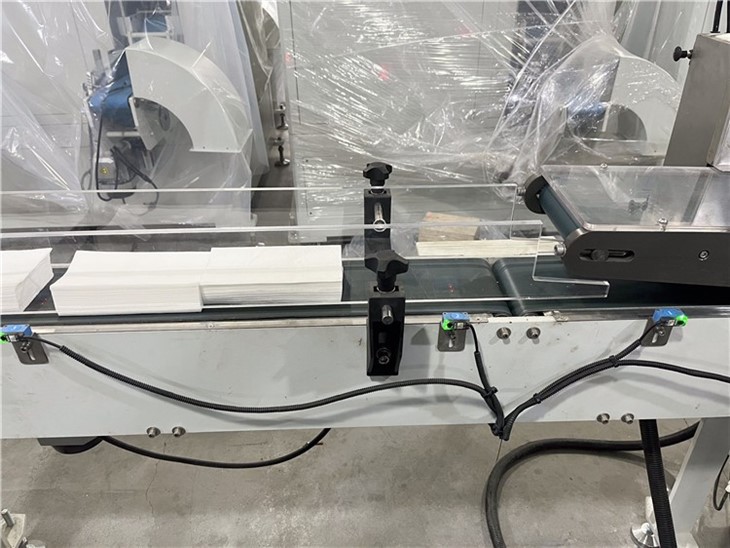
The feeding system is responsible for transporting the tissue paper packs to the cartoning area. It needs to be adjustable to accommodate different pack sizes and densities. For high - density packs, the feeding mechanism may need to provide more robust support to prevent jams. Our machines use a combination of conveyor belts and suction cups to ensure smooth and accurate feeding. The suction cups can be adjusted in terms of their suction force, allowing them to grip tissue packs of different densities securely.
Carton Erection Unit
The carton erection unit takes flat carton blanks and forms them into three - dimensional cartons. When dealing with different tissue densities, the carton size and strength need to be carefully matched. For high - density tissue packs, larger and stronger cartons may be required to withstand the pressure exerted by the pack. Our carton erection unit can be easily adjusted to form cartons of various sizes and styles, ensuring a proper fit for different tissue densities.
Insertion Mechanism
The insertion mechanism is where the tissue paper pack is placed into the erected carton. This process requires precise control to handle different densities. For high - density packs, the insertion mechanism may need to use a more forceful pushing action, while for low - density packs, a gentler touch is required to avoid damage. Our machines are equipped with servo - driven insertion systems that can adjust the force and speed of insertion based on the detected density of the tissue pack.
Sealing Unit
After the tissue pack is inserted into the carton, the sealing unit closes and seals the carton. The sealing process needs to be reliable regardless of the tissue density. For high - density packs, the carton may be under more internal pressure, so a stronger sealing method, such as hot - melt glue or ultrasonic sealing, may be preferred. Our High Speed Facial Tissue Box Sealing Machine can be configured with different sealing options to meet the requirements of various tissue densities.
Adaptive Control Systems
To handle tissue paper with different packaging densities more efficiently, our Automatic Tissue Paper Cartoning Machine is equipped with advanced adaptive control systems.
Density Detection Sensors
These sensors are placed at strategic points in the machine, such as the feeding area. They can detect the density of the tissue pack by measuring parameters such as weight, thickness, and stiffness. Once the density is detected, the control system can adjust the operating parameters of the machine accordingly. For example, if a high - density pack is detected, the feeding speed may be reduced, and the insertion force may be increased.
Programmable Logic Controllers (PLCs)
PLCs are the brains of our machines. They receive data from the density detection sensors and use pre - programmed algorithms to adjust the operation of the various components. The PLCs can control the speed, force, and timing of each stage of the cartoning process, ensuring optimal performance for different tissue densities. With the ability to store multiple sets of operating parameters, the machine can quickly switch between different tissue products with different packaging densities.
Operational Strategies for Different Packaging Densities
In addition to the technical features of the machine, we also recommend some operational strategies for handling tissue paper with different packaging densities.
Pre - Testing and Calibration
Before starting a production run, it's essential to conduct pre - testing with sample tissue packs of different densities. This allows operators to fine - tune the machine settings, such as the feeding speed, insertion force, and sealing time. By calibrating the machine accurately, the risk of product damage and production errors can be minimized.
Quality Control Checks
Regular quality control checks should be carried out during the production process. Operators should inspect the cartoned tissue packs for any signs of damage, misalignment, or improper sealing. If any issues are detected, the machine settings can be adjusted immediately to ensure consistent product quality.
Staff Training
Proper staff training is crucial for operating the Automatic Tissue Paper Cartoning Machine effectively. Operators should be trained to understand the different packaging densities of tissue paper and how to adjust the machine settings accordingly. They should also be familiar with the operation of the density detection sensors and PLCs to troubleshoot any problems that may arise.
Conclusion
Our Automatic Tissue Paper Cartoning Machine Automatic Carton Packaging Machine is designed to handle tissue paper with different packaging densities with high efficiency and reliability. Through its advanced components, adaptive control systems, and recommended operational strategies, it can meet the diverse needs of the tissue paper packaging industry.
If you're interested in our Automatic Tissue Paper Cartoning Machines or have any questions about handling tissue paper with different packaging densities, please feel free to contact us for a detailed discussion and procurement negotiation. We're committed to providing you with the best packaging solutions tailored to your specific requirements.

References
- Smith, J. (2020). Advances in Packaging Machinery for Tissue Products. Packaging Technology Journal, 15(2), 45 - 52.
- Johnson, A. (2019). The Impact of Packaging Density on Cartoning Processes. Industrial Engineering Review, 22(3), 78 - 84.
- Brown, C. (2021). Adaptive Control Systems in Packaging Machinery. Automation and Robotics Magazine, 18(4), 33 - 40.